







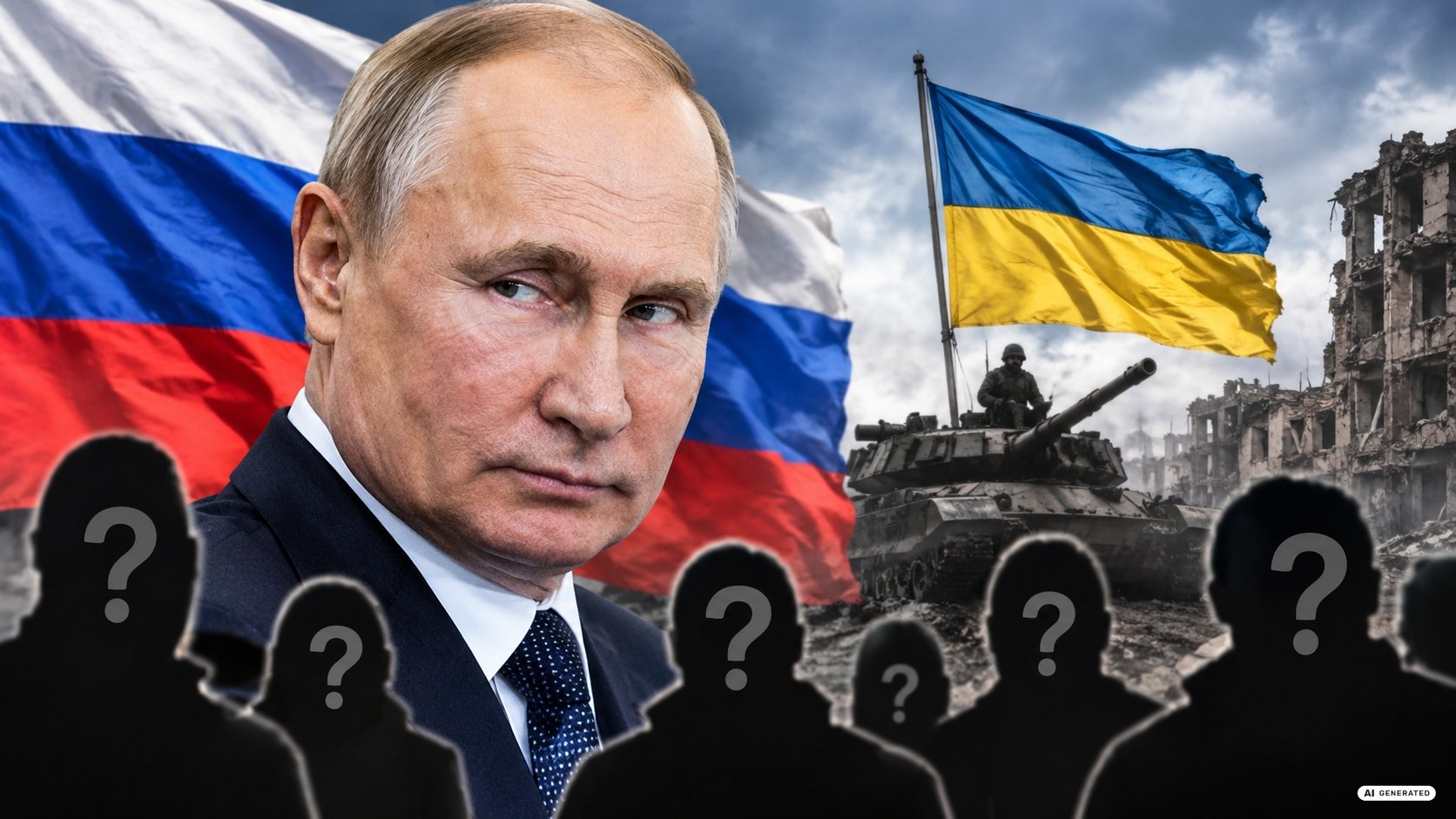
Like most people who publicly express our opinions, I’ve been called by all sorts of names. If you criticize open borders, you’re a xenophobe; if you defend traditional values, you’re a reactionary; if you call for safety on the streets, you’re a far-right extremist, and so on. Generally speaking, opposing left-wing policies means you’re labelled a fascist or worse, but it’s something one gets used to. Standing up for Ukraine has earned me new labels such as ‘OTANista’ (NATO supporter), ‘mercenary of the CIA’ or ‘warmonger’. Again, this was to be expected. However, despite the huge number of articles and interviews I have published opposing Russia’s war of aggression, I have recently been accused on social media of working for the Kremlin or of ‘being paid in rubles’. The attack does not come from Russian bots or trolls, but from not-particularly-intelligent left-wingers who believe it is incompatible to be a conservative and right-winger whilst defending Ukraine.
Of course, this idea is not his own but has been promoted by various media outlets and political parties which, in many cases, have, for electoral gain, bought into the Russian propaganda portraying Putin as the ‘defender of traditional values’. Consequently, any politician who defends those values is automatically aligned with the Kremlin. For this reason, the label ‘pro-Russian’ has come to carry a meaning similar to that of the label ‘fascist’, which, through overuse, ended up losing its real meaning.
However, the label has not only been applied to the right, but also to the left, albeit less frequently and with less virulence. For example, the recent and controversial victory in Brazil of Lula – founder of the São Paulo Forum and currently Putin’s man in the region – was applauded by ‘centrist’ parties clearly opposed to Russia for preventing a victory by the right-wing Bolsonaro, an applause that is, at the very least, contradictory. Generally speaking, a narrative has emerged in which ‘Putinism’ is found only at the extremes – and far more so in the new right-wing parties, lumped together as the far right, than on the far left. Is this really the case? Have we reached the situation we find ourselves in because of the extremes? This is what this article aims to answer.
The Italian Iron Maiden
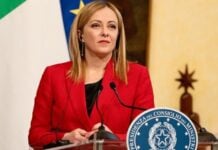
Ahead of the Italian general election in September 2022, a campaign was launched against the expected victory of the Italian centre-right – the alliance of Fratelli d’Italia, La Lega and Forza Italia. According to many media outlets, a victory for Giorgia Meloni would bring the ‘black shirts’ back onto the streets of Rome and lead to Italy’s exit from the European Union. Many outrageous claims were made, including that Giorgia Meloni was Vladimir Putin’s candidate. This lie was glaringly obvious the moment one examined the historical and policy record of Fratelli d’Italia – a party strongly in favor of the Atlantic Alliance – but it was then pointed out that her coalition partner, Matteo Salvini, and La Lega were a pro-Russian party and, therefore, Meloni became an ally of the Kremlin by ‘association’.
The reality that has been evident from the outset is that the Italian Government led by Giorgia Meloni has been one of the strongest supporters of Ukraine within the European Union. Of course, Matteo Salvini’s party has not made things easy for her, as we are seeing from the obstacles that La Lega has been placing in the way of sending the thirteenth military aid package to Ukraine since the start of the invasion. Salvini’s presence in the coalition is heavily criticized by many commentators who, however, do not apply the same scrutiny to the left. The second-largest party on the Italian left, the Five Star Movement, takes the same stance as La Lega with regard to Ukraine: weapons should not be sent to the victim of the aggression in the interests of peace.
The Ukrainians are the first to want peace, but the problem arises when it comes to defining what we mean by peace. Giorgia Meloni explained it perfectly a month ago in a speech to the Italian Senate: ‘We all want peace. The difference lies in how we think we can achieve it. In my view, support for Ukraine is not an alternative to peace: it is what makes peace possible. Because if the aggressor can demand the surrender of their adversary, what is the point of negotiating? Except that surrender is not peace; it is conquest. If Ukraine were to stop defending itself tomorrow, as many hope or propose, we would not have peace. We would be talking about the occupation of a European nation and the return of the Soviet-style imperialism that Europe suffered for half a century… The peace we yearn for, and which we are working to build, even at the cost of consensus, is a just peace.’ Only a just peace can prevent war from returning within a few years. The peace preached by the Lega or the Five Star Movement and also championed by other parties on the left and right across Europe, is something else entirely. Essentially, it boils down to not sending weapons to Ukraine to force it to negotiate peace; then, for some reason I cannot fathom, the aggressor will not exploit its advantage to continue massacring its now more vulnerable adversary but will instead sit down at the negotiating table. Peace will come and everything will go back to the way it was before.
Russland über alles
Pacifism and anti-militarism have always been hallmarks of the left, which opposed any army other than the Red Army; unfortunately, these views are now also found on the right, although for different reasons. The most significant example is that of Alternative for Germany (AfD), where the pro-Russian faction leading the organization seems determined to repeat the mistakes of the past: peace at any price so that Germany can once again buy cheap gas from Russia.
However, reducing the Kremlin’s influence to the AfD or Sahra Wagenknecht’s far left is an oversimplification designed to make us forget how Russia once had the main German parties in its pocket. Barely a month ago, the former German chancellor, the social democrat Gerhard Schröder, was appointed to the supervisory board of Hyperglobus, a Russian supermarket chain that had previously been part of the German Globus group. This is nothing new, given that when he left the chancellorship in 2005, he joined the gas giant Gazprom and was the driving force behind ‘Nord Stream’ as chairman of the supervisory board of the project’s operating company, ‘Nord Stream AG’, where he drew an annual salary of 250,000 euros. In “Nord Stream: Wie Deutschland Putins Krieg bezält” (Nord Stream: How Germany Financed Putin’s War), German journalists Stefan Daubert and Ulrich Thiele describe Schröder as Putin’s ‘greatest useful idiot’ in history.
Nord Stream was important to Russia because it avoided the need for transit through Ukraine, where the Orange Revolution had taken place in 2005. And to carry it out, the Russians resorted to bribing German politicians, as well as Swedish and Danish ones, from countries that were reluctant to support the project. Russia spent up to 100 million euros a year on ‘soft power’ in Germany, sponsoring football teams and all manner of activities. In Mecklenburg-Western Pomerania, which was the region that benefited most, they organized a sailing regatta, a music festival and the annual Russia Day celebrations. Angela Merkel, Chancellor from 2005 to 2021, raised no objections to Nord Stream either, adhering to the principle of ‘democratization through trade’, which she would later justify as a means of democratizing Russia through business dealings with democratic countries – something very difficult to believe after seeing how the former Chancellor blamed the Baltic states and the Poles for the war in Ukraine.
The annexation of Crimea and the war in the Donbas did not, either, pose an obstacle to ‘Nord Stream 2’, which Russia had announced in 2013, and four years later, the European institutions accepted the Russian argument that the construction of ‘Nord Stream 2’ was a continuation of the 2005 project and did not require the approval of all EU Member States – which was necessary under regulations adopted in 2009 and would have been vetoed by Poland or Estonia.
The book mentions a meeting in Berlin in 2018 between a Ukrainian delegation from ‘Naftogaz’ and Chancellor Merkel’s energy advisers — Gunter Wetzel and Christian Schmidt. The Ukrainians argued that, for Russia, oil and gas are weapons, and that ‘Nord Stream 2’ significantly increased the likelihood of a large-scale Russian invasion of Ukraine. The Germans replied that the pipeline was a private matter between private companies, and when the Ukrainians insisted that an escalation of the conflict would lead to an exodus of many war refugees to Germany, the response was that they would know what to do with them. In 2014, Russian gas accounted for 41 per cent of German imports; by 2021, this figure had risen to 65 per cent. Russia earned 104,000 million euros from Germany — a third of the Kremlin’s military spending at the time.
Since 2006, Mecklenburg-Western Pomerania has been governed by the Social Democrats (SPD), led by Manuela Schwesig, who was an enthusiastic supporter and promoter of the ‘Nord Stream’ project. On 25 February 2022, Schwesig posted a photo on Facebook of Schwerin Castle, the seat of the regional parliament, illuminated in blue and yellow, with the caption: ‘Solidarity with Ukraine. An important signal from the regional parliament’. The response from the then Ukrainian ambassador to Germany, Andriy Melnyk, was: “What a disgrace – such hypocrisy!” In the September 2026 elections, the AfD won with 38.22 per cent of the vote, and the SPD came second with 35.5 per cent, although it will be able to govern with the support of The Left and the Greens. The Russian issue in Germany goes far beyond the AfD.
The EU’s hypocrisy
On 9 October, Donald Trump surprised the world by announcing an agreement with Vladimir Putin to lift sanctions on fuel exports to Russia for six months. The reason given by Trump for taking such a regrettable decision was that importing Russian diesel would reduce fuel costs for Americans – costs caused by the US war in Iran. In reality, the agreed supply of Russian diesel was nowhere near enough to ease the cost of living for American farmers, and the measure, on the eve of the 3 November mid-term elections, was nothing more than an electoral ploy to win votes. Indeed, following the Republicans’ electoral defeat, the deal appears to have fallen through before yielding any concrete results and, according to various reports, the first oil tankers that set sail from Russia bound for the United States have altered their routes.
Europe reacted with outrage – and rightly so – to an agreement that broke with the policy of isolating Russia over its invasion of Ukraine. However, the US President responded by stating that the European Union had paid Russia $250,000 million for energy, whilst his Treasury Secretary, Scott Bessent, denounced the ‘hypocrisy’ of the Europeans, who ‘continue to fund Vladimir Putin’. Is this true? Unfortunately, it is, and this year has seen a record level of imports of Russian liquefied natural gas thanks to the exemptions agreed in the 21st sanctions package, approved in the spring, which allows European companies to continue transporting Russian gas to third markets. According to the Financial Times, the EU imported 9.89 million tons of Russian gas in the first half of 2026, which is 18 per cent more than in the same period of 2025. Within the EU, France, Spain and the Netherlands are currently the main buyers of Russian gas. Belgium was in second place in this ranking and, in July, 100 per cent of Belgium’s imports of liquefied natural gas came from Russia – a situation that had not been seen since 2021. However, in August, Belgium stopped all imports from Russia.
The case of Spain is particularly striking because Pedro Sánchez’s Socialist Government, although its far-left coalition partners are in favor of peace and of not sending weapons to Ukraine, is clearly pro-Ukrainian. In fact, on 6 November, a new military aid package for Ukraine worth 437 million euros was announced. However, Spain is one of the countries that has contributed the least, totaling 1,470 million euros from 2022 to October 2025, of which 790 million has been allocated to military equipment. By contrast, in the first half of 2026 alone, Spain increased its imports from Russia by 17 per cent, amounting to a total of 1,421 million euros according to data from the State Secretariat for Trade and the Ministry of the Economy. Imports of Russian gas rose by 72 per cent in May, 32 per cent in June and 45 per cent in July.
Curiously, business dealings and imports of Russian gas have not earned Sánchez the label of ‘pro-Russian’ that is so readily applied to other political leaders. The most recent case is that of Poland, where Prime Minister Donald Tusk has lashed out at his rivals in Law and Justice over the Constitutional Tribunal crisis, accusing them of seeking to destroy the rule of law in collusion with the Kremlin: ‘It is no coincidence that they have the support of pro-Russian forces around the world and today, in this conflict, they have the support of an army of Russian bots on the internet’. Tusk seems to forget that, in 2022, under the Law and Justice government, Prime Minister Mateusz Morawiecki travelled to Kyiv by train with the conservative prime ministers of Slovenia and the Czech Republic, Janez Janša and Peter Fiala, to offer their support to Ukraine, and that Poland sent all manner of military aid and opened its borders to Ukrainian refugees.
“The Law and Justice government began rearming the Polish armed forces, preparing them for war even before the Russian invasion of Ukraine; it introduced the law on the defence of the homeland and was the first to warn of the danger posed by Russia. Do you know what Tusk said at the time? That Law and Justice was a Russophobic party. When President Lech Kaczyński sent a letter to NATO in 2010 warning of the Russian threat, the current Foreign Secretary, Sikorski, said he was ‘mentally ill’,” pointed out journalist Jacek Karnowski, editor-in-chief of the weekly ‘Sieci’ and the conservative television channel ‘wPolsce24’, when I asked him about this matter. The use of the Russian threat against political rivals for electoral gain is hugely irresponsible, particularly as it undermines the credibility of the threat itself. Self-serving labels and disinformation ultimately always play into the enemy’s hands.
This article was originally published in Misao.