












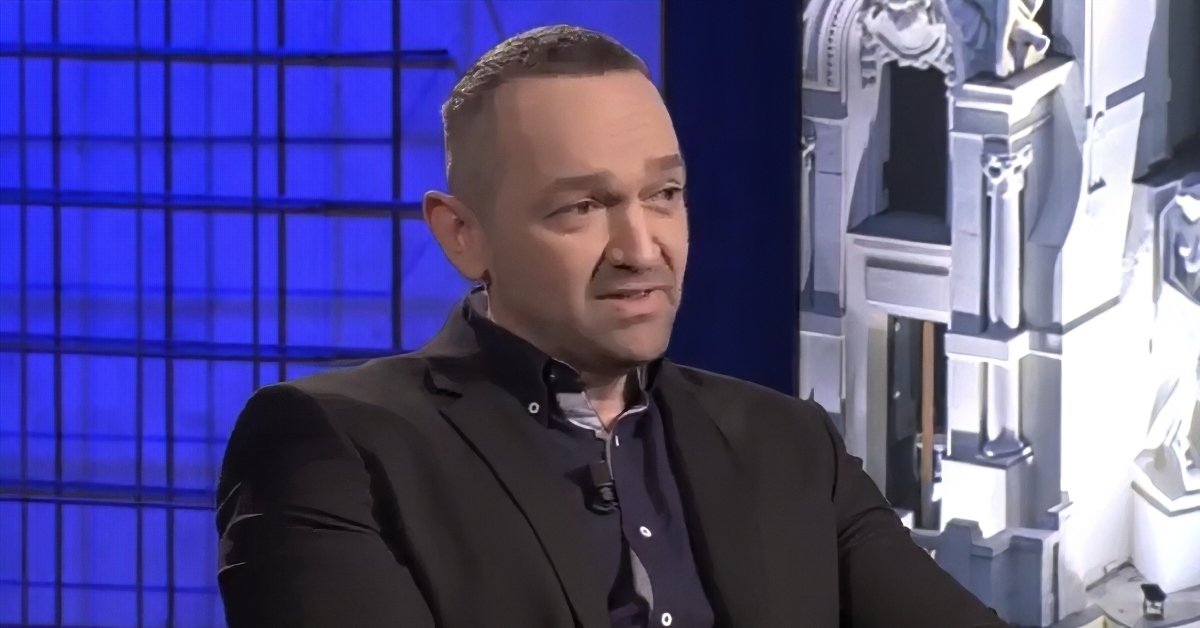
Spain is facing parliamentary elections that could bring about a fundamental shift in the political balance of power. In an interview with Fronda, Spanish columnist Alvaro Penas offers an uncompromising assessment of Pedro Sánchez’s administration, pointing to corruption scandals, the housing crisis, mass immigration, and growing public discontent. He also explains why the right-wing Vox party is gaining support among the younger generation and whether Spain is headed for a genuine political shift.
Spain is heading towards a crucial general election on 29 November. How would you describe the political mood in the country today? Is this simply another election, or are we witnessing a deeper political turning point?
Many of us are counting down the days until 29 November, when this seemingly endless nightmare will finally come to an end. It is not even a month since the Urda rail accident, which left 69 people dead and more than 200 injured, and which was the second serious accident on the Madrid–Seville high-speed line in less than a year. The first was in Adamuz and left 46 dead and nearly 300 injured. The Minister for Transport, Óscar Puente, who had boasted that rail transport in Spain was ‘at its best’, tendered his resignation six days after the second accident. But then there was the ‘blackout’, which claimed ten lives, and no one was held accountable; the DANA floods in Valencia, which claimed 233 lives and for which political responsibility has only been accepted – albeit belatedly – by the regional government led by the People’s Party, but not by the national government; or the La Palma volcanic disaster in 2021, where nearly 40 per cent of the island’s reconstruction remains pending and many families are still without permanent housing.
Ceuta, after four months, remains under occupation, and every day a new case of corruption comes to light, each more shameful than the last. The only thing this Government has been good at is taking over state institutions, placing ‘its own people’ in key positions within independent bodies and public enterprises, and controlling the Constitutional Court, the Council of State, the Attorney General’s Office and the Bank of Spain. Despite its disastrous management, the Government has poured vast sums of money into media outlets sympathetic to its cause, and RTVE, the public broadcaster, is on a par with North Korea. Ousting Sánchez is not just a matter of national dignity; it is also a matter of survival. Spain cannot endure another four years of incompetence, lies and corruption.
The latest polls suggest that the People’s Party and Vox may together win a parliamentary majority. Do you believe Spain is genuinely moving to the right, or is this primarily a protest vote against Pedro Sánchez and the Socialist government?
Spain is, sociologically speaking, a left-wing country. Most people without a defined political affiliation would tell you they are left-wing if you asked them about their ideology; it is something many here refer to as the ‘PSOE state of mind’. Why? Because despite the centre-right’s absolute majorities, it has never mounted an ideological challenge to the tenets of the left and, in fact, has adopted many of the left’s ‘social’ causes as its own, such as abortion or gender ideology. In other words, there has never been a genuine cultural battle, and the result is that, despite the left’s appalling governance and corruption, many voters will eventually return to voting for them, practically out of habit.
At the moment, there is widespread disillusionment with Pedro Sánchez, and many of his voters are going to stay at home or even vote for other parties. However, in the wake of VOX’s rise, a new phenomenon has emerged, particularly amongst young people: many are no longer ashamed to position themselves on the right of the political spectrum. There are two factors at play here: firstly, after years of ideological dominance by the left, many young people are reacting by rebelling against the ideology of the system; secondly, VOX is the third-largest political force and has dared to challenge the left’s sacred mantras. That said, either we wage a thoroughgoing cultural battle and carry out a complete overhaul of the ‘PSOE state of mind’, or we will continue to descend, faster or slower, into hell.
What, in your view, are the main reasons for the decline in support for Sánchez and the PSOE? Is it corruption scandals, the cost of living, housing, migration, relations with separatists, or simply political exhaustion after years in power?
Corruption is what has left its mark—even physically—on Sánchez. We’re talking about his brother being convicted, his wife facing charges, two of his trusted aides—Koldo García and José Luis Ábalos—sentenced to 19 and 24 years in prison, respectively, a third aide, Santos Cerdán, facing charges, and the attorney general being convicted… The list is endless, and Judge Pedraz of the National Court is investigating whether the PSOE should be charged as a legal entity for an alleged crime of criminal organization. Sánchez became prime minister thanks to a motion of no confidence against the People’s Party (PP) prompted by corruption. José Luis Ábalos was the Socialist spokesperson who defended that motion of no confidence, arguing that Spaniards “could not tolerate corruption or indecency,” and he appealed to “exemplary conduct” and “decency.” According to the investigations, the first corruption scheme began 18 days after Ábalos was appointed Minister of Public Works and he also placed prostitutes in public institutions.
The appalling mismanagement—at a time when Spain has set a record for tax revenue—is another decisive factor, and what happened in Ceuta has been the clearest proof that this government does not care in the least about the lives or safety of Spaniards.
Spain has recently experienced its first general strike in 14 years, with large demonstrations in Madrid, Barcelona and other cities. Housing costs, wages and living standards were at the centre of the protests. How serious is the social frustration behind these demonstrations?
Of course, there is widespread social frustration over all these very real problems, but the general strike has had nothing to do with any of this. I believe this is the first instance of a general strike that has not been called against the government, but against the opposition. The unions have not mobilized in the past eight years, and they are doing so just over two weeks before the election. It’s a tasteless ploy aimed at mobilizing the left ahead of an election that looks very bleak for Sánchez—but it hasn’t worked out for him either. The CEOE (Confederation of Business Organizations) estimated participation at less than 5%, while the unions proclaimed a success that was nowhere to be seen.
Housing has become one of the central issues of the election campaign. Rents have risen dramatically in many Spanish cities, while younger people increasingly struggle to buy or even rent a home. Has the housing crisis become a symbol of the broader failure of the current political model?
The housing problem is structural. There is high demand and very little supply, and housing prices have risen 46% in five years, while wages have increased by only 23%—that is, half as much. Sánchez claims to have built one million homes (41% of which were built by the previous government), but the actual figure is around 700,000, and he is the president who has built the least public housing since 1981. Furthermore, during these years, the population has grown by 3 million people due to immigration, which explains the increase in demand. The left’s solution has not been to build more homes or to facilitate their construction, but rather to intervene in the housing market—a strategy that has also failed to produce the expected results. The overall outcome is very negative, which is why it is so surprising that the PSOE and its allies are now presenting themselves as the ones who can fix the problem if they return to power.
The eviction of an 87-year-old woman in Madrid was used by the left to take to the streets, filling Puerta del Sol with tents, dominating the news cycle, and even justifying a general strike and early elections. The stubborn reality is that since Sánchez has been in power, there have been 90 evictions per day, for a total of 272,000 during his eight years in office. As with everything they’ve done wrong—that is, almost everything—they never accept responsibility, and the blame always falls on the right and the far right. In fact, their achievements over these eight years are so meager that the Socialist election campaign has used “The Power of Love” as one of its main slogans—a sentimental message showcasing the affection between Pedro Sánchez and his wife, Begoña Gómez, who faces charges of influence peddling, embezzlement of public funds, business corruption, misappropriation of funds, and unauthorized practice of a profession. Of course, the other pillar is fear: the return of the far right, which will set us back fifty years.
Immigration is also becoming one of the most divisive issues in Spanish politics. Vox is calling for much tougher measures, while the government argues that immigration is essential for economic growth. How do ordinary Spaniards actually see this issue?
According to polls, immigration is the second-biggest concern for Spaniards, behind only housing, and as I mentioned earlier, it is also linked to that issue. On the one hand, there is concern about safety, and a majority links the rise in immigration to crime. This has been denied by the left, which argues that Spaniards commit more crimes overall, but according to 2024 data from the Ministry of the Interior (the most recent to show a breakdown by nationality), foreigners—who at that time made up 13% of the population—committed 25% of criminal offenses, and the percentage rises for serious crimes: homicides, 32%; robberies, 31%; and sexual assaults, 27%.
On the other hand, there is widespread frustration with well-intentioned open-door policies and the regularization of immigrants, which are creating a permanent pull factor and causing the influx of undocumented immigrants to continue unabated. The government justifies this on the grounds that it benefits the economy and, of course, out of “solidarity,” but it fails to answer the fundamental questions: What is the limit? What jobs will they have? Where will they live? What happened in Ceuta has been a wake-up call for many people who have watched as a city was, quite literally, invaded and overwhelmed. The situation in Ceuta remains unresolved after four months, and this month more than 11,000 migrants have arrived on the island of El Hierro, which has a population of 12,000. This immigration policy is unsustainable.
Vox is currently polling close to 20 per cent and could become indispensable for forming a government. Has Vox now become a permanent major force in Spanish politics, rather than simply a protest party?
Yes, it seems so. Basically, there was a demand for a party like VOX because many Spaniards felt they had no one to turn to when it came to voting and were disappointed with the policies of the People’s Party. However, being needed doesn’t guarantee success. “Ciudadanos,” founded in Catalonia in 2006 by Albert Rivera to represent the non-nationalist electorate, became the most-voted-for party in Catalonia, governed in regions such as Madrid and Andalusia in coalition with the PP, and, upon its entry into national politics, held 57 seats in 2019. However, its mistakes would lead to its downfall and complete disappearance by 2023. “Podemos,” founded in 2014, became the third-largest political force a year later with 65 deputies and would eventually join Sánchez’s government in 2020. Now it has only 5 members of parliament left and may disappear entirely in these elections. For VOX, the toughest test is now ahead, as it must live up to the expectations that millions of Spaniards have placed on it and set itself apart from the traditional parties. If VOX brings about change, fights the cultural battle, and does not allow itself to be seduced by the comfortable seats of power, it will firmly establish itself. Otherwise, it may follow in the footsteps of the two parties mentioned above.
This interview was originally published by Fronda.