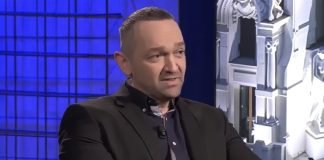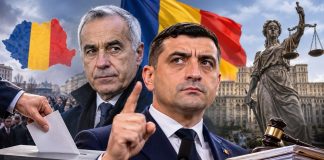











Călin Georgescu walked out of jail after nearly two months. He’ll spend the next thirty days under house arrest wearing an ankle monitor. He’s accused of defrauding a businessman, yet even in reporting his release, the press felt obliged to remind readers that the defendant is “pro-Russian.” For two years, the coverage kept coming back to Putin. To find out who actually wanted Georgescu as president, a trip to Bucharest would have done it.
On November 24, 2024, 2,120,401 Romanians voted for him. An independent won the first round of the presidential election, and the sitting prime minister, with an entire party behind him, failed to make the runoff. That would have been a good time for the people in power in Bucharest to ask those voters what they’d found in Georgescu that the parties they’d known all their lives had never given them.
Georgescu talked, for instance, about the farmer who sells vegetables from his garden out in front of his house, and he wondered how the government had the nerve to come around asking that man for taxes. Could someone have voted for Georgescu because that farmer reminded them of their father? To read some of the commentary, you’d think a Romanian voter needed instructions from the Kremlin to form an opinion about their own government.
The “pro-Putin” label came in handy for everyone who thought they knew how the election would turn out. It spared the losers the trouble of figuring out why they’d lost, and much of the press the embarrassment of explaining to readers what was happening in an EU member state. Romania’s Constitutional Court upheld the first-round results. Four days later, citing intelligence reports, the same court annulled the entire election while Romanians abroad were already voting in the runoff.
By the time the polls reopened, Georgescu had been barred from running again. Two million free citizens who knew perfectly well whom they wanted as president were denied even the chance to vote for him a second time.
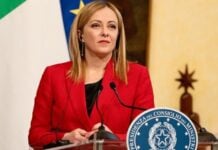
George Simion, leader of Romania’s AUR party, called Georgescu a “political prisoner” and explained why his party will continue to support him now that he’s home. “We have to get back to the truth, to the runoff, to democratic elections,” he said. Simion warned that what happened in Romania could happen elsewhere in Europe. He singled out the 2027 elections in Poland, France, and Italy.
Georgescu has every right to fight the charges as a free man. And anyone who hailed the annulment of that election as a victory for democracy ought to answer one question. If a court in Moscow had called off an election while voting was underway, and the candidate who finished first had disappeared from the ballot the next time the polls opened, what newspaper in Europe would have dared call that democracy?